
The Evolution of Analytics in MLB Front Offices
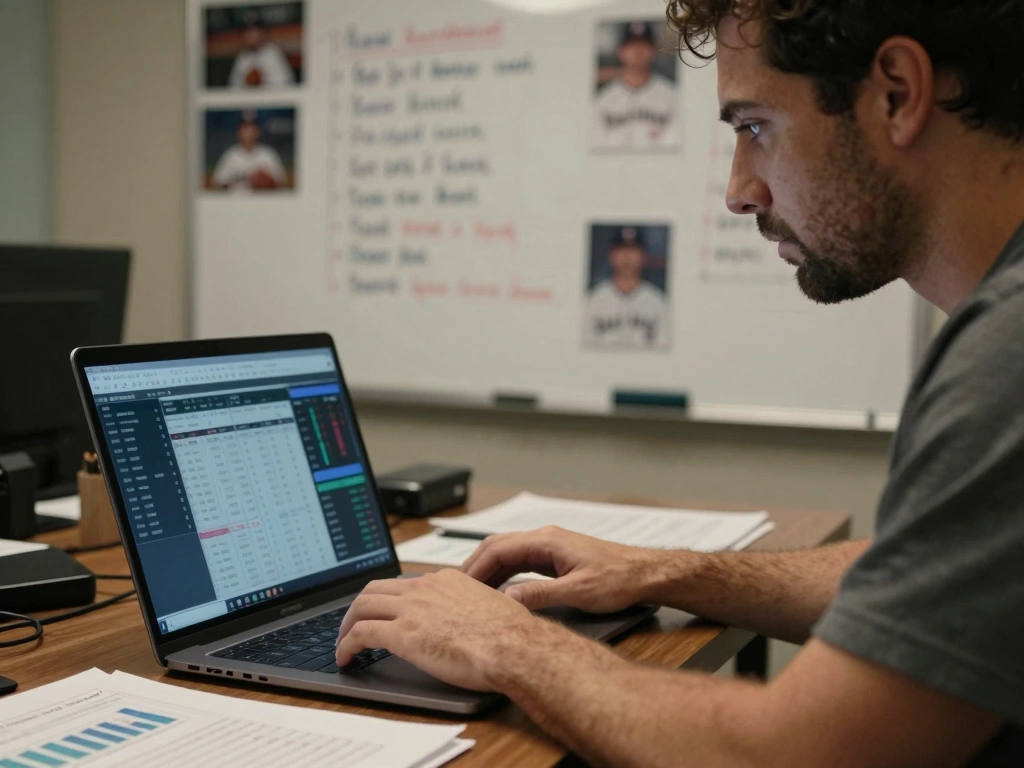
Historical Context: From Traditional Methods to Data-Driven Decisions
The landscape of Major League Baseball (MLB) has undergone a seismic shift over the past two decades, particularly in the way teams evaluate talent and strategize for success. Traditionally, baseball decisions were largely reliant on subjective assessments from scouts and managers who based their evaluations on long-standing norms and instinctive judgments. However, the advent of technology and data analysis has ushered in a new era, making analytics an integral part of baseball operations.
Historically, teams would rely on statistics such as batting average, home runs, and earned run average (ERA) to assess player performance. While these metrics provided a basic understanding, they failed to encapsulate a player’s full value or potential. The introduction of advanced metrics like on-base percentage (OBP), slugging percentage (SLG), and later, Wins Above Replacement (WAR) began to reshape the conversation around player evaluation, signaling a shift towards a more analytical approach.
Key Milestones in the Adoption of Analytics
Several key milestones have marked the evolution of analytics in MLB front offices:
- Moneyball (2003): The publication of Michael Lewis's "Moneyball" highlighted how the Oakland Athletics used sabermetrics to compete against wealthier teams. This changed the perception of analytics from a niche interest to a mainstream strategy.
- Introduction of PITCHf/x (2007): This system revolutionized how teams analyzed pitching by capturing data on pitch types, speeds, and trajectories, allowing for a deeper understanding of pitcher effectiveness.
- Statcast (2015): MLB implemented Statcast, a comprehensive tracking system that collects data on player movements, batted ball trajectories, and more, enhancing the depth of analytics available to teams.
- Expansion of Analytics Departments: Over the past decade, nearly every MLB team has expanded its analytics departments, employing data scientists, analysts, and former players trained in data interpretation to aid decision-making.
Impact of Technology on Data Collection and Analysis
The impact of technology on data collection and analysis in MLB is profound. Tools such as TrackMan, which utilizes radar technology to track the trajectory of pitches and balls in play, provide teams with an unprecedented level of detail about player performance. This technological advancement allows for real-time data analysis, enabling teams to make informed decisions on the fly.
Moreover, cloud computing and advanced databases have made it easier for front offices to store and analyze vast amounts of data. With machine learning algorithms, teams can now identify patterns and trends that were previously undetectable, leading to more accurate predictions about player performance and game outcomes.
Data Sources Used by MLB Front Offices
Player Performance Metrics and Advanced Statistics
MLB teams now utilize a plethora of player performance metrics that go beyond traditional statistics. Metrics such as:
- Wins Above Replacement (WAR): A comprehensive statistic that sums up a player's total contributions to their team in terms of wins.
- Fielding Independent Pitching (FIP): A statistic that measures a pitcher's effectiveness at preventing home runs, walks, and hit-by-pitches while allowing for a better evaluation irrespective of the defense behind them.
- Exit Velocity and Launch Angle: These metrics analyze how hard and at what angle the ball is hit, providing insight into a batter’s potential success.
These advanced statistics allow teams to make more informed decisions regarding player acquisitions, trades, and game strategies.
Scouting Reports and Video Analysis Integration
Scouting reports have long been a staple of player evaluation, but the integration of video analysis with traditional scouting practices has led to more nuanced assessments. Teams now utilize software that combines video footage with analytics, enabling scouts and analysts to evaluate player mechanics, decision-making, and situational awareness effectively.
Tools like Rapsodo provide detailed information on pitch characteristics and hitting mechanics by capturing data through high-speed cameras. The ability to correlate visual data with statistical metrics allows teams to create a comprehensive profile of a player's abilities and potential for improvement.
In-Game Data and Real-Time Analytics Platforms
In-game data analytics has transformed how teams approach game strategy. Platforms that provide real-time analytics allow managers and coaches to make tactical adjustments based on ongoing performance. For instance, teams can analyze pitcher effectiveness against specific hitters during a game, leading to more strategic decisions regarding pitching changes or defensive alignments.
Tools such as Hawkeye offer real-time tracking of every play, providing teams with insights into player performance and situational outcomes instantly. This capability enables decisions that can significantly impact game results, making analytics a crucial component of in-game strategy.
How Analytics Influence Player Transactions
Evaluating Free Agents: Beyond Traditional Scouting
When it comes to evaluating free agents, analytics have shifted the focus from traditional scouting reports to data-driven assessments. Teams now utilize complex models that analyze a player’s performance over multiple seasons, taking into account factors like age, injury history, and environmental conditions where the player thrived or struggled.
For example, when the New York Yankees signed Gerrit Cole in December 2019 for a record $324 million, their decision was bolstered by extensive data analysis showcasing his K/9 rate, FIP, and performance in critical game situations, highlighting his potential to perform in high-pressure scenarios.
Trade Decisions: Analyzing Value and Potential
Analytics also play a crucial role in trade decisions, allowing teams to evaluate the value of potential trades more accurately. By using statistical models, front offices can assess the projected future performance of players rather than relying solely on their current abilities. This approach has been evident in trades involving high-profile players.
Take the trade of Mookie Betts from the Boston Red Sox to the Los Angeles Dodgers in February 2020. The Dodgers utilized advanced analytics to gauge Betts's long-term value, considering factors such as his WAR and overall impact on both offense and defense, leading to a blockbuster trade that significantly altered the landscape of the league.
Contract Negotiations Supported by Data Insights
In contract negotiations, analytics provide teams with the leverage to argue for fair market value based on a player's performance metrics. Teams can present data-driven arguments that support their offers, while players and their agents can counter with their own analytics to justify higher demands.
For instance, during negotiations with players like Kris Bryant, teams may analyze his historical performance data against comparable players to determine a fair contract. This analytical approach has made negotiations more complex but also more transparent, benefiting both parties in the long run.
The Role of Analytics in Game Strategy and Decision Making
In-Game Strategy Adjustments Based on Analytics
Analytics have increasingly informed in-game strategies, allowing managers to make decisions that can alter the course of a game. Data-driven insights help in determining when to pull a pitcher, shift defensive alignments, or even when to attempt a steal.
For example, teams have started relying on data to decide when to utilize relief pitchers, often pulling starters earlier than traditional methods would suggest if analytics indicate a decline in performance against opposing hitters. The Tampa Bay Rays have effectively implemented this strategy, often utilizing an "opener" approach to maximize favorable matchups.
Pitching Strategies: Leveraging Data for Matchups
Data-driven pitching strategies have become a hallmark of modern baseball. Teams analyze opposing hitters' weaknesses and adjust pitching tactics accordingly. By examining data on a hitter's performance against specific pitch types, pitchers can tailor their approach to exploit these weaknesses.
For instance, if analytics show that a particular hitter struggles against high fastballs, a pitcher may focus on elevating their fastball in that matchup. This strategic leveraging of data has resulted in more efficient pitching and improved outcomes for teams.
Defensive Alignments and Shifts Guided by Analytics
Defensive alignments have transformed dramatically due to analytics. Teams now utilize data to determine the optimal positioning of infielders and outfielders based on the hitting tendencies of opposing players. The rise of defensive shifts has significantly altered the game, leading to increased defensive efficiency.
The Houston Astros are well-known for their extensive use of defensive shifts, which are calculated based on detailed analyses of hitters' spray charts. This data-driven approach has often led to increased outs and minimized runs, showcasing the importance of analytics in shaping defensive strategies.
The Future of Analytics in MLB Front Offices
Emerging Technologies and Their Potential Impact
The future of analytics in MLB front offices is poised for even more significant advancements with the emergence of new technologies. Innovations in artificial intelligence and machine learning are set to revolutionize how teams analyze data, predict player performance, and create strategies. As computational capabilities improve, teams will have access to even more sophisticated models that can deliver insights in real time.
For example, wearable technology may provide teams with physiological data that could help in assessing player readiness, fatigue levels, and injury risks, enabling them to optimize player performance and health management.
Challenges and Limitations of Current Analytical Approaches
Despite the advancements, challenges remain in the world of baseball analytics. One significant limitation is the overreliance on data, which can sometimes lead teams to overlook intangible factors such as player chemistry, mental resilience, and situational awareness. These elements are often difficult to quantify but are crucial to a player's overall contribution to the team.
Additionally, the volume of data can be overwhelming, leading to analysis paralysis where decision-makers struggle to act due to the sheer amount of available information. Teams must balance data-driven decisions with instinctual knowledge and experience.
Predictions for the Next Decade in Baseball Analytics
As we look ahead, the next decade in baseball analytics is likely to see continued integration of advanced technologies and strategies. We may witness the rise of predictive analytics that can forecast player performance with astonishing accuracy, thereby changing how teams approach trades and free agency.
Moreover, the ongoing development of augmented reality (AR) and virtual reality (VR) may open new avenues for training and analysis, allowing players to practice against virtual representations of opposing pitchers based on data-driven insights.
In conclusion, the integration of analytics into MLB front offices has fundamentally transformed the game. From player evaluation to in-game strategy, analytics are now at the heart of decision-making processes. As technology continues to evolve, the role of analytics in baseball will likely expand, further shaping the future of the sport.